
 Image courtesy of:
Planning a Los Angeles team celebration for colleagues who rarely share the same room takes a different kind of thinking than organizing a conference or a brand launch. The goal is simple but easy to underestimate: give people who spend most of their time in separate cities, time zones, or home offices a genuine reason to feel connected again. That means making careful choices about structure, timing, pace, and the physical setting long before the day arrives.
Why Distributed Teams Need a Different Approach
When a team sees each other every day, a casual happy hour does the job. When colleagues have worked apart for months, the social muscles are a little stiff. People may know each other's Slack handles and calendar availability without knowing much about the person behind either. A Los Angeles team celebration designed for a distributed group acknowledges that gap honestly and builds toward closing it, rather than assuming that proximity alone will do the work.
This shifts the planning emphasis. The venue matters, but the program matters more. The catering matters, but the pacing of the day matters just as much. And the number of attendees matters less than whether each person leaves feeling seen.
Clarifying the Purpose Before Anything Else
Before you book a single thing, write down one sentence that finishes this prompt: after this gathering, colleagues will feel... That sentence shapes every decision that follows. Feeling reconnected is different from feeling celebrated, which is different from feeling aligned on a new direction. A team that has just gone through a difficult period of change needs a different kind of Los Angeles team celebration than a team that is simply geographically spread out and otherwise settled.
Share that sentence with whoever is co-planning the event. If two people finish the prompt with very different answers, that tension is worth resolving now, not on the day. A gathering that tries to be both a morale reset and a full strategy workshop rarely does either well.
Building a Schedule That Leaves Room to Breathe
Distributed teams often arrive at in-person gatherings slightly over-scheduled. Planners, eager to justify the investment in travel and venue, fill every hour. The result is that colleagues spend the day moving from session to session without ever having an unscripted conversation.
A more useful structure reserves at least a third of the schedule for unstructured time, and signals that clearly on the agenda. Label it honestly: open conversation, or time to catch up, rather than networking, which tends to make people feel like they are at a conference. When people know that a stretch of open time is built in and expected, they relax into it instead of checking their phones.
A rough half-day structure might look like this: a low-pressure arrival activity for the first forty-five minutes as people trickle in, one focused group exercise mid-morning, a shared meal with no agenda, and a short closing ritual that ends on time. A full-day version can add a second group activity after lunch, but consider whether your team actually needs more content, or whether they would be better served by a longer, unhurried lunch.
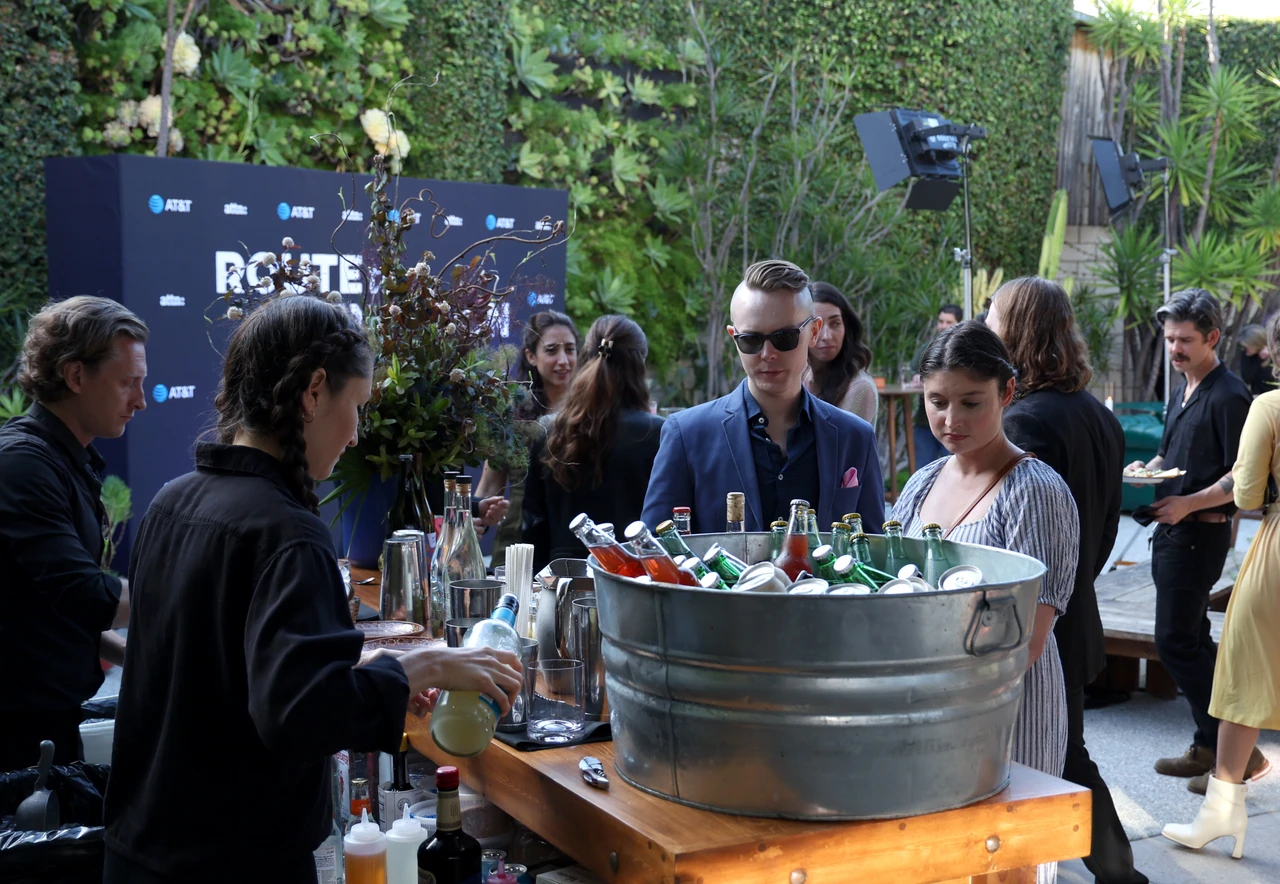
From Marvimon’s photo library: Guests gathering around drinks in the courtyard at the screening event Image credit: Jerritt Clark / Inhouse Images.
Choosing Activities That Work for People Who Know Each Other a Little
Icebreakers designed for strangers can feel condescending to a team that has worked together for a year or more. The sweet spot is an activity that reveals something new without requiring emotional exposure. Atlassian's team playbook offers short icebreakers that help people learn about one another. Choose one that suits your Los Angeles team celebration.
One approach that works well: ask each person to bring one physical object that represents something they have been working on, thinking about, or proud of outside of work. Keep the sharing voluntary and time-boxed. Colleagues who spend most of their interaction in meetings often have almost no knowledge of each other's lives outside of deliverables, and this kind of low-stakes sharing closes that gap quickly without requiring anyone to be vulnerable on demand.
Avoid activities that require competitive scoring, physical ability, or performance in front of the group. These tend to benefit the loudest people in the room and leave quieter colleagues further behind.
Planning a Los Angeles Team Celebration: An Actionable Checklist
Use this list in the weeks leading up to the gathering. Assign a name to each item so that nothing sits in the ambiguous middle.
- Write and share the one-sentence purpose statement with all co-planners
- Agree on the headcount deadline with the venue and caterer, then collect replies in time
- Draft a schedule with time blocks clearly labeled as structured or unstructured
- Identify one person responsible for keeping the day on time without being rigid about it
- Choose activities and brief whoever is facilitating them, even if that person is internal
- Prepare a simple one-page brief for attendees covering what to expect, what to wear, and how to get there
- Confirm what the venue can accommodate and ask specifically about any arrangements you are assuming, rather than taking them for granted
- Build a fifteen-minute buffer into every transition
- Plan a clear, warm closing moment so the day does not simply trail off
- Follow up within forty-eight hours with something small, a shared photo, a brief note, a next step, that keeps the energy from evaporating
A Hypothetical Example: The Half-Day Reconnection
Imagine a ten-person creative team, spread across three states, meeting in person for the first time in eight months. The planner chooses a half-day format rather than a full day, partly because travel is involved and partly because the team has said in surveys that longer gatherings feel draining.
The gathering has a late morning start to allow time for flights and traffic. Guests arrive to find coffee and pastries already out, with no one standing at the door with a clipboard. The first forty-five minutes are unstructured. People find their own pace.
After the arrival window, a single facilitated exercise begins. The team has been asked in advance to prepare a three-sentence answer to this prompt: tell us one thing you made this year that you are genuinely proud of. It does not have to be work-related. Each person speaks for about three minutes, and the facilitator keeps a light hand, only stepping in to manage time. By the end, colleagues who have shared hundreds of video calls know ten things about each other they did not know before.
A long, unrushed lunch follows. No slides. No presentations. Seating is arranged loosely so that people mix rather than clustering with whoever they already know best, but seats are not formally assigned, which tends to create more anxiety than it solves.
A short closing ritual ends the day. Each person writes one word on a card describing how they are leaving versus how they arrived. The cards are photographed and shared in the follow-up email. The gathering ends at the agreed time, with room for people to leave without rushing the closing activity. The deliberate modesty of the program is its greatest asset.
Managing the Practical Details Without Losing the Personal Ones
The logistical side of a Los Angeles team celebration deserves careful attention, but it should not crowd out the human planning. A few details worth working through:
Arrival time and travel. If colleagues are flying in, a mid-morning start with a relaxed arrival window reduces stress significantly. Send clear directions and transit options in the attendee brief, especially for people who do not know the neighborhood.
Dietary needs. Collect these early and confirm them with whoever is handling catering. A colleague who cannot eat the meal feels excluded before the first activity even begins.
A designated point of contact. Someone at the gathering should be the clear go-to if a guest has a question or a problem on the day. This does not need to be a formal role, just an understood one.
Photography. Decide in advance whether you want informal photos of the gathering, and if so, let colleagues know before they arrive. Some people are comfortable being photographed; others are not. A brief note in the attendee communication respects that range without making it a bigger issue than it needs to be.
Choosing a Setting That Supports the People in It
The physical setting shapes mood in ways that are easy to underestimate. A sterile conference room asks people to behave like they are still at work. A space with warmth, texture, and a sense of place gives people permission to relax slightly, which is exactly what a distributed team needs at a Los Angeles team celebration.
The setting should have enough visual interest to spark a conversation on its own, but not so much that it competes with the people in it. Natural light helps. So does some connection to the outdoors, and a layout that allows people to move around rather than sitting in fixed rows for hours.
Millwick in the Downtown LA Arts District has original brick, timber, and mature plants that give a gathering a grounded, unhurried feeling. SmogShoppe in the Culver City Arts District brings vertical gardens and vintage interiors to what was once a working smog-check center, a combination that tends to prompt genuine curiosity from guests encountering it for the first time. Both spaces include a garden courtyard and a Grand Hall, so you can ask the team whether both settings suit your proposed schedule. Confirm any movement between them in advance. If your plans involve any specific setup, technical needs, or timing requirements, ask the venue team early so that nothing is assumed on either side.
The Follow-Up Is Part of the Gathering
A Los Angeles team celebration does not end when people leave the room. The follow-up matters more than most planners account for. Distributed teams return to their separate routines quickly, and without something to carry forward, the warmth of the day fades faster than anyone intends.
A useful follow-up is specific rather than general. Instead of a broad message saying it was wonderful to see everyone, try sharing one concrete thing that came out of the day: a shared photo, a brief list of what people said they were proud of, or a single idea that surfaced during lunch that the team wants to explore. Keep it short and send it within two days, while the gathering is still fresh.
If reconnection was the purpose, ask colleagues what helped and what they would change. Use their answers when planning the next Los Angeles team celebration.
When you are ready to think through the logistics and the setting for your own gathering, Ask Marvimon about your plans to start the conversation.
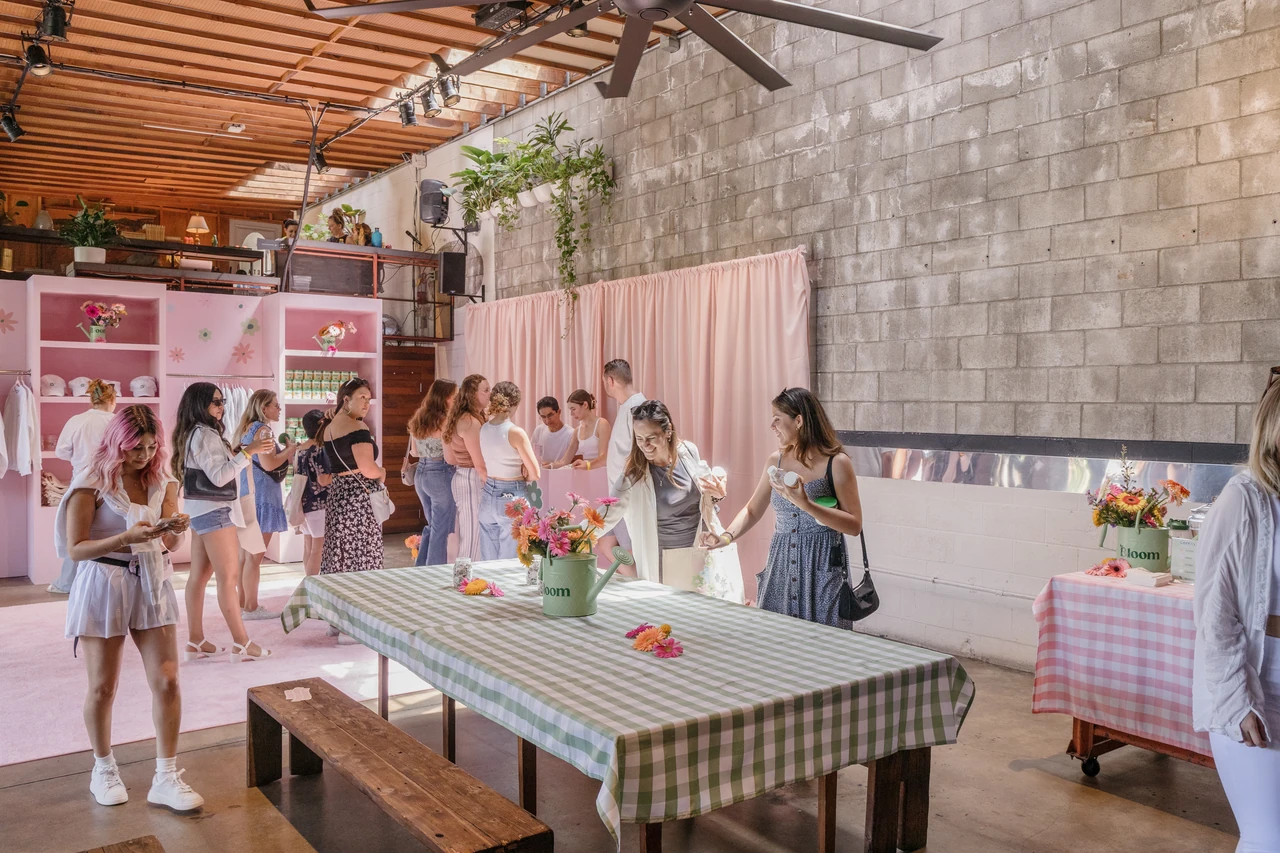
Cover: Guests around a checkered activity table at the Bloom Nutrition event Image credit: Bloom Nutrition.