
 Photography:
Every couple planning an outdoor ceremony hopes for clear skies, but a solid wedding rain plan is one of the most practical things you can build before your date arrives. It has nothing to do with pessimism. It has everything to do with giving yourself the mental space to enjoy your wedding day regardless of what the clouds decide to do. You can agree on who handles weather updates while you are getting ready. That gives the team a clear point of contact if plans need to change.
This guide walks through the decision timeline, the documents worth preparing, and the conversations to have with your venue team well before any rain appears on the radar.
Why a Wedding Rain Plan Needs a Deadline, Not Just a Decision
The most common rain-plan mistake is treating weather as a same-day problem. By the time you are getting dressed, you should already know exactly what will happen if it rains. That means your rain plan needs a decision deadline built into it, not just a backup option sitting in a folder.
Think of it in three stages: the planning stage (when you map out your options), the confirmation stage (when you agree on a trigger point with your venue and vendors), and the communication stage (when you tell guests what to expect). Each stage has its own timing, and missing one makes the next harder.
Agree on a Weather Review Schedule
Ask your venue contact when the team wants to review weather and how it gets current information. That schedule should reflect the actual event and the time each supplier needs. Do not choose a rain-plan deadline just because another couple used it.
Start by separating two kinds of decisions. Some choices belong in the planning stage, such as which spaces could be used and which layouts the venue will consider. Other choices depend on current conditions and need review closer to the date. Put both in your wedding rain plan, with the right person beside each task.
For example, a florist may need notice to change an order. A transport contact may need a confirmed arrival point before briefing drivers. Ask each person for their real deadline. Record any conflict and take it back to the venue contact before calling the plan complete.
Write the next agreed check-in on the document. Add a backup contact if the main person is unavailable. Leave room to record the latest decision, who confirmed it and when. A forecast update does not automatically tell every supplier what to do; a clear handoff does.
Setting Your Trigger Point
Your trigger point is the specific condition that activates your rain plan. Without one, you and your vendors may have very different ideas about what counts as "bad enough weather" to change the setup. Ambiguity costs time and creates stress.
Ask the venue team to define the conditions and timing that require a review or change. Record their decision process in plain language. A percentage on a weather app is not, by itself, a complete venue plan. The team also needs to confirm which alternatives are workable for your event.
The trigger point should be agreed on and written down during your initial venue conversations, not invented the week of the wedding. Ask your venue team what decision timeline works for their setup, since different spaces require different amounts of time to reconfigure.
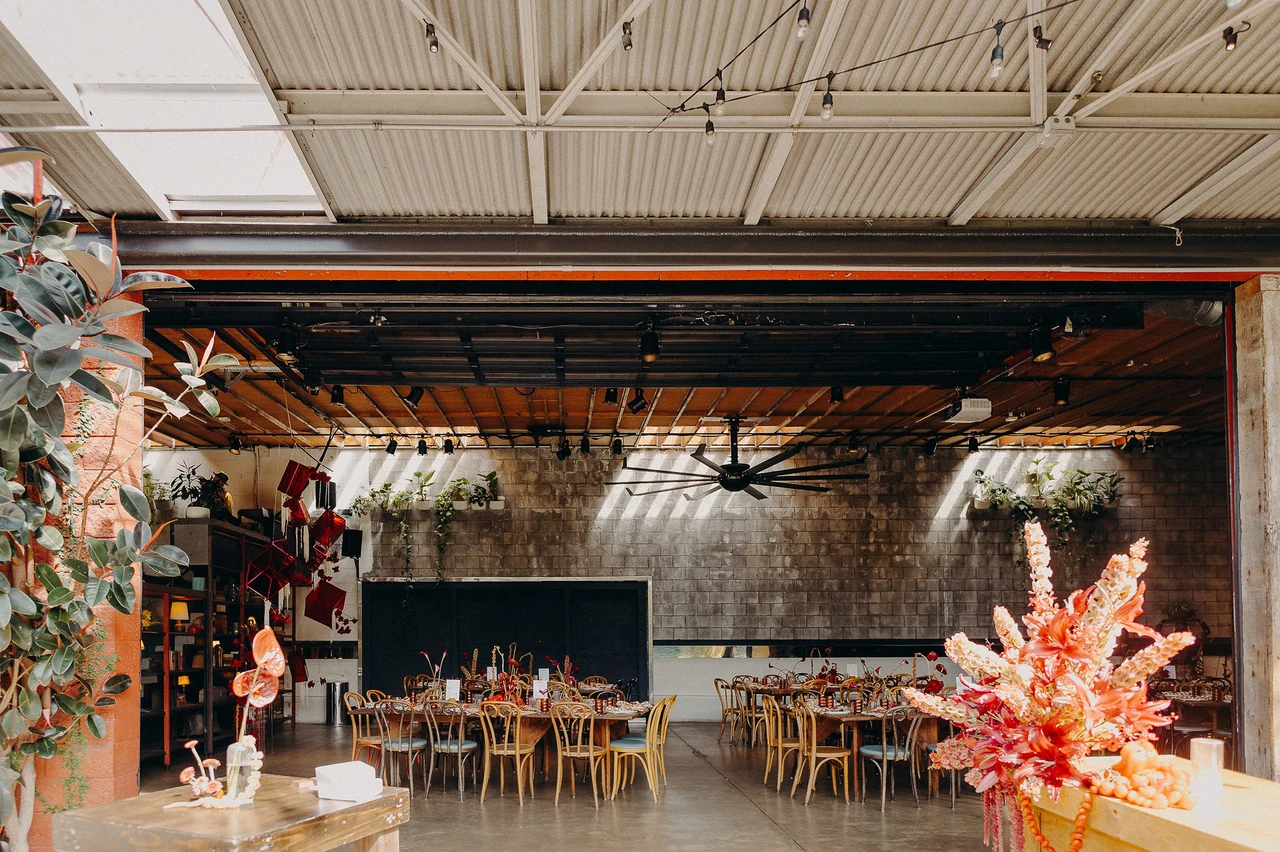
From Marvimon’s photo library: Dinner tables and flowers inside SmogShoppe’s Grand Hall Image credit: ITLA Photo.
The One Safety Note Worth Knowing
While tents and canopies are common rain solutions at outdoor events, the National Weather Service notes that tents do not provide safe shelter from lightning. Defer any lightning-specific safety decisions to your venue team rather than handling them on your own.
What Your Rain Plan Document Should Actually Contain
A rain plan is most useful when it is a short, clear document that every key person has access to, not a lengthy email thread buried in someone's inbox. One or two pages is ideal. It should cover the following:
The primary layout and the backup layout. Describe both clearly, even if the backup seems obvious. Where does the ceremony move? Where does cocktail hour go if the courtyard is unavailable?
The trigger point and who calls it. Name the person with authority to make the final call. On a busy wedding morning, having a single decision-maker prevents confusion.
The vendor notification list. List every vendor who needs to know about a layout change, the best way to reach them, and the deadline by which they need the update to adjust their own logistics.
Guest communication language. Draft a short message in advance that you can send quickly if conditions change. Keep it warm, clear, and reassuring. Something like: "We are moving the ceremony inside to stay comfortable for everyone. All details below. We cannot wait to see you." Having this ready means you are not writing it under pressure.
Day-of contact numbers. Everyone on the vendor team should have a printed copy of key contacts, not just a digital one, in case of signal issues.
A Hypothetical Worked Example: One Change, One Handoff
Imagine a couple planning a garden ceremony with an indoor reception. This is a planning example, not a description of a Marvimon event or venue policy. Before the wedding, the couple asks the venue contact to review a possible indoor ceremony arrangement. The team confirms what it can offer, along with its own decision deadline.
The couple puts that information in a short wedding rain plan. Their planner will receive updates from the venue and pass confirmed changes to suppliers. A friend will handle guest questions using the latest approved arrival note. Nobody is asked to interpret a forecast or decide on building safety for themselves.
At the agreed review, the venue team confirms a move to the alternative arrangement. The planner checks that each supplier has the same version of the document. The florist confirms the revised placement; the photographer notes which spaces the team has approved. Any unresolved detail stays marked as a question until the responsible person answers it.
Before sending a guest update, the friend checks the event address, entrance and arrival time against the confirmed plan. They remove the old note from the wedding website and replace it with the new one. They also contact guests who asked for direct updates, using the method those guests prefer.
The useful result is a traceable handoff. Each person knows where the current information lives and whom to ask if something changes again. The example does not promise that weather will stay settled or that every event can move indoors. It shows how to communicate a choice once the venue has confirmed it.
Communicating the Change to Guests
Guest communication during a weather change is where many couples feel the most anxious. The fear is usually that guests will be disappointed or confused. In practice, guests are almost always relieved to hear from you with clear information rather than arriving uncertain.
A few principles make guest communication easier. Send it early rather than waiting for certainty. A message sent Wednesday that says "we are moving indoors as a precaution" is far more helpful than a message sent Friday morning. Keep the tone steady and warm, not apologetic. You are taking care of your guests, and that is worth communicating directly.
If your guest list includes people traveling from out of town, or guests who need extra time to plan their transportation, prioritize reaching them first.
Checking In With Each Vendor on Weather Flexibility
Your wedding rain plan is only as strong as the vendors who know about it. Some vendors have their own weather protocols. Others will need to hear yours and confirm they can work within it.
A useful pre-wedding checklist for vendor weather alignment:
- Florist: confirm how quickly arrangements can be repositioned if the ceremony moves indoors
- Photographer and videographer: confirm they have scouted the indoor space and know the lighting conditions
- Band or DJ: ask what lead time they need to adjust speaker placement or setup for a different room
- Catering team: confirm any service flow changes if cocktail hour moves inside
- Officiant: confirm they have the updated ceremony location and any new timing
- Hair and makeup team: confirm their on-site schedule accounts for a possible earlier start if the timeline shifts
- Transportation vendor: confirm whether pickup and drop-off points change with an indoor ceremony
Ask each vendor directly what they need from you and when. Do not assume everyone is working from the same document.
The Day-Of Mindset: Releasing the Weather
Once your wedding rain plan is in motion, let the named venue and planning contacts handle their agreed roles. They may still need to review changing conditions. Keep a clear way for them to reach you if a new decision needs your input.
One practical way to support this mindset is to assign someone else, your planner, a trusted family member, or a point-of-contact friend, to handle any last-minute weather-related questions from guests. That way, you are not fielding "do I need an umbrella?" texts while someone is pinning your boutonniere.
Weather is the one variable in a wedding that no one controls. A well-built rain plan does not remove the weather; it removes the chaos that weather can otherwise cause.
Conversations Worth Having With Your Venue Team
Every venue handles weather contingencies differently, and the specifics of how a space reconfigures for rain are conversations to have directly with the people who know that space best. Do not rely on assumptions or on what worked at a different venue.
If you are exploring a space like Millwick, with its garden courtyard and Grand Hall set inside original brick-and-timber architecture, or SmogShoppe, where vertical gardens and vintage interiors create a distinct atmosphere across indoor and outdoor areas, ask the venue team specific questions about their process. What is their recommended decision timeline? How do they handle the transition between outdoor and indoor setups? What do they need from you and by when?
Those answers will shape your rain plan in ways that a general guide like this one cannot. Use this guide to prepare your questions. The confirmed arrangements must come from your venue and event team.
Practical Next Step
Document your trigger point and your vendor notification list before your next venue check-in. Bring both to the meeting so you can confirm the timeline with your venue team directly.
If you are still in early conversations about your event space, Ask Marvimon about your plans to start the venue-specific portion of your weather planning on solid ground.
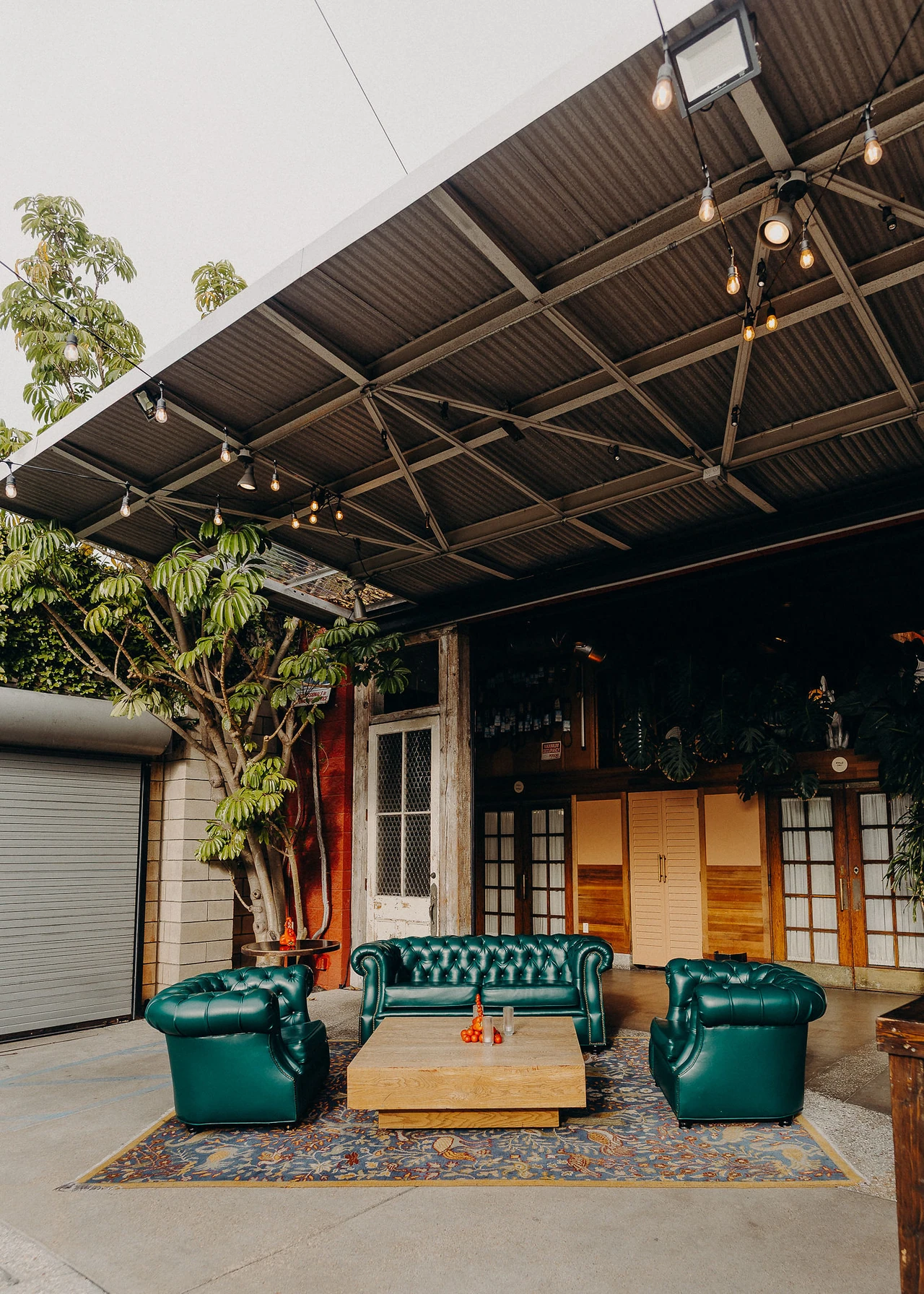
Cover: SmogShoppe’s courtyard lounge beneath the open service-bay doors Image credit: ITLA Photo.